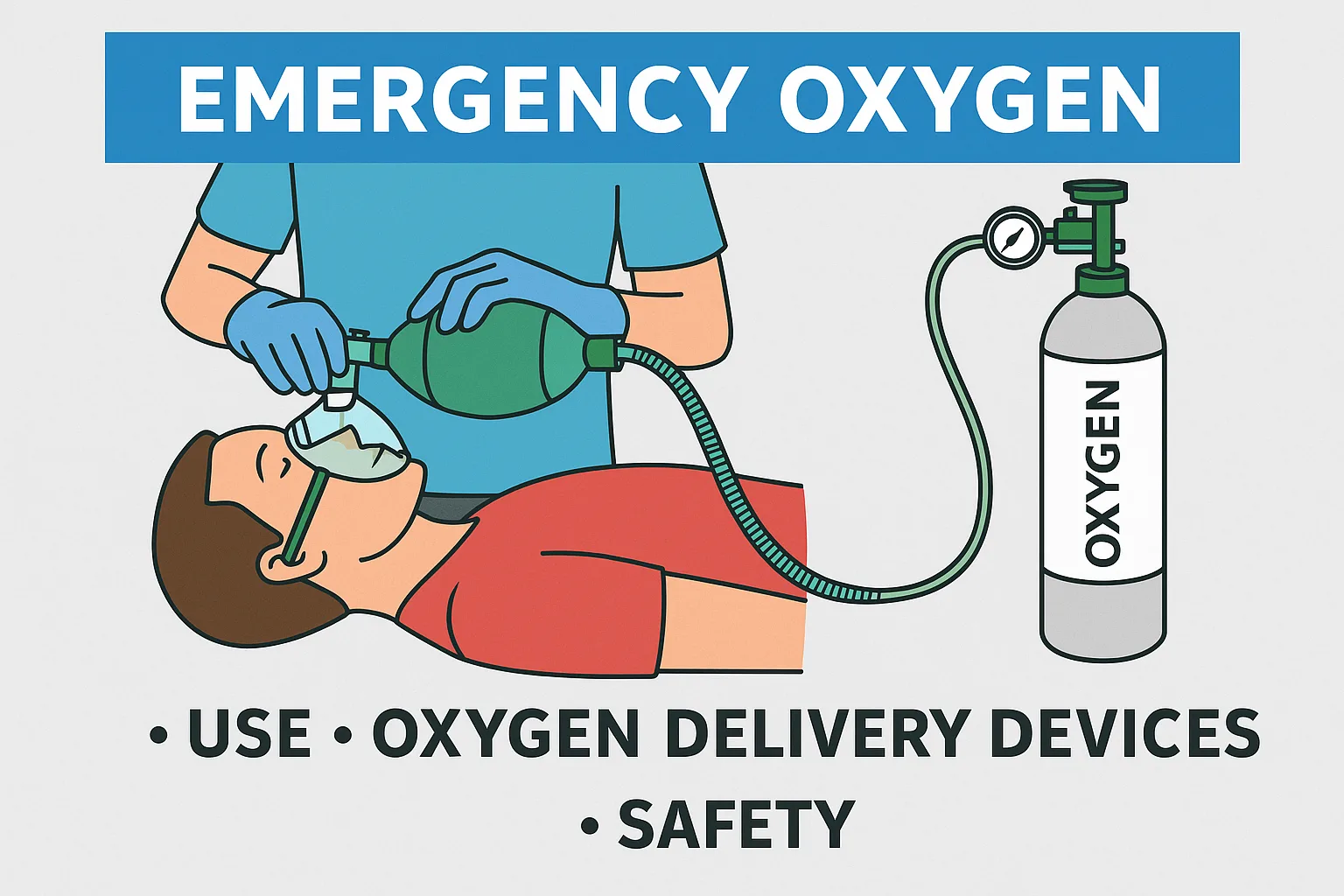
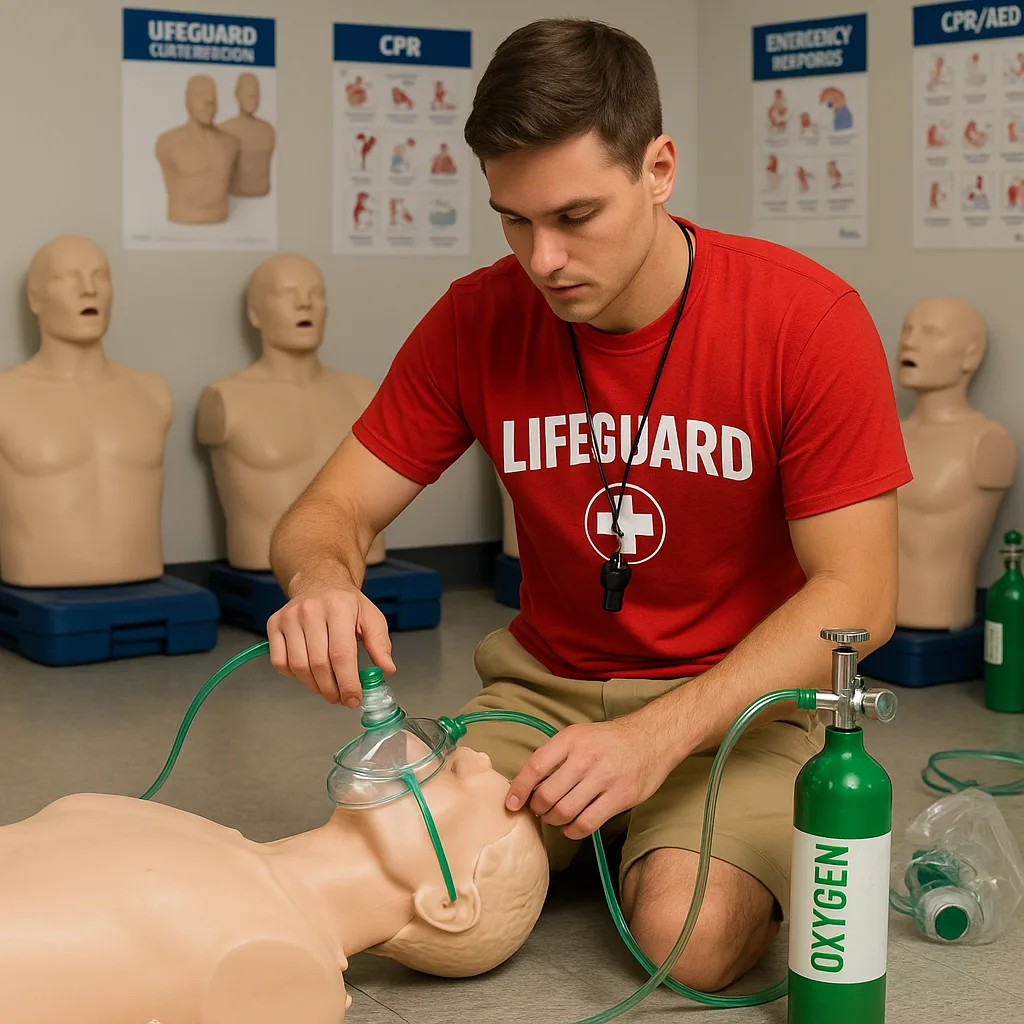
What emergency oxygen certification covers
Emergency oxygen certification trains you to recognize when a person is not getting enough oxygen and to deliver it safely while help is on the way. It is a short standalone credential, and it is the course most often missing from an otherwise well-certified aquatic team.
- Recognizing the signs of hypoxia and respiratory distress
- Assembling, checking and safely operating an oxygen cylinder and regulator
- Choosing the right delivery device for the situation, including nasal cannula, non-rebreather mask and bag-valve mask
- Delivering emergency oxygen to a breathing person and to a non-breathing person
- Combining oxygen administration with CPR and AED use
- Safe storage, handling and cylinder-change procedures
Who needs emergency oxygen certification
Emergency oxygen certification is written for people who already respond to emergencies and want the next tool in the chain:
- Lifeguards and head guards at pools, waterfronts and attractions
- Pool managers and aquatic supervisors responsible for equipment readiness
- Camp health staff and athletic trainers
- Workplace and school emergency response team members
- Dive professionals and boat operators
Facilities that keep an oxygen unit on the wall but have nobody certified to use it are the reason this course exists. The unit is only an asset if someone on shift holds a current emergency oxygen certification.
Frequently asked questions about emergency oxygen certification
What is emergency oxygen certification?
It is a credential confirming you can safely assemble and operate emergency oxygen equipment and administer oxygen to a person in respiratory distress, both alone and alongside CPR.
Is emergency oxygen certification the same as oxygen provider certification?
Yes, in practice. Emergency oxygen certification, oxygen provider certification and O2 certification all refer to the same skill set, and employers use the terms interchangeably.
How long does emergency oxygen certification last?
Two years, the same window as most credentials, so it renews conveniently alongside your CPR and lifeguarding certificates.
Do I need CPR certification before emergency oxygen certification?
Yes. A current CPR certification is the prerequisite, because oxygen administration is taught as an extension of resuscitation rather than as a standalone skill.
Is emergency oxygen certification required for lifeguards in New York?
It is not universally required, but many New York employers expect it of head guards and supervisors, and any facility that stocks an oxygen unit needs certified staff on every shift.