Call anytime
Call anytime
Write email
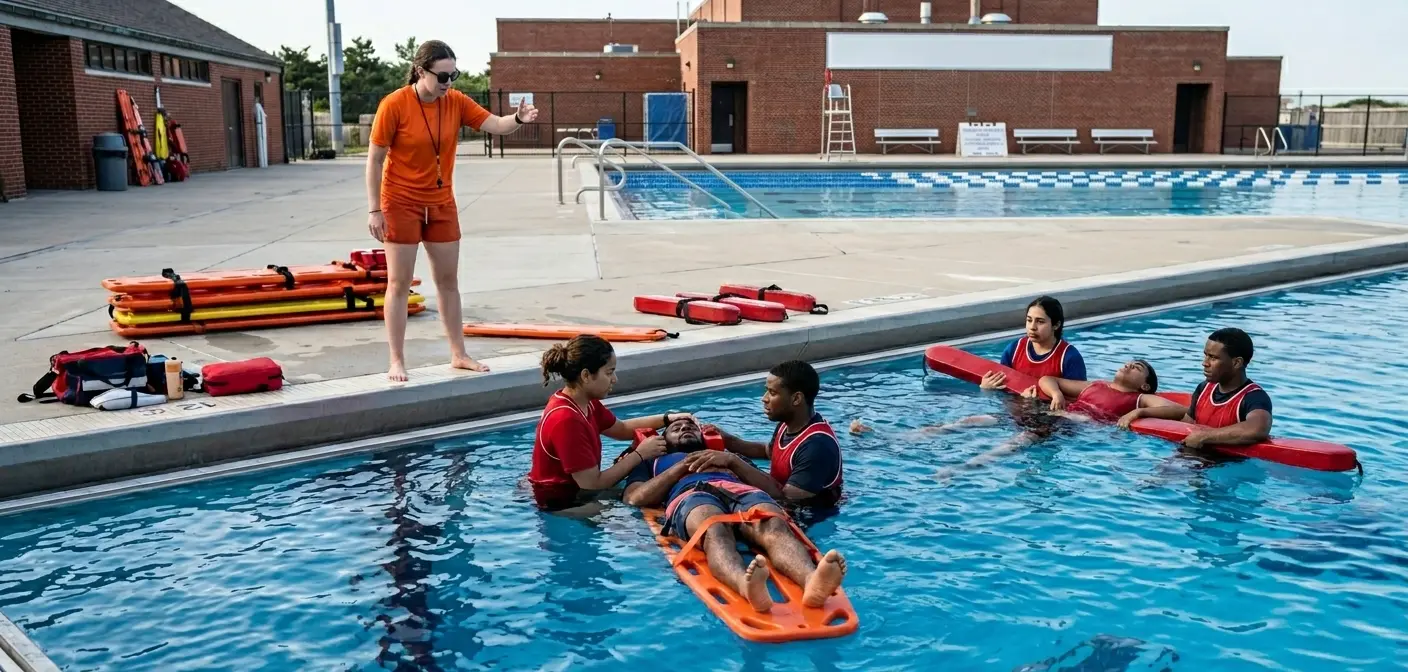
Teaching and guarding are two different careers that happen at the same pool. Anyone considering a Water Safety Instructor class in Long Island is really choosing between them, or deciding to hold both. This page sets the two side by side: what the work is, what it pays, where it leads, and which one to do first.
A lifeguard watches water in which nothing is supposed to be happening and acts when it does. Their skill is sustained attention and a rehearsed response. An instructor stands at the wall with a class, breaks a stroke into parts, and corrects it in a child who is not listening. Their skill is planning and class management. People who are excellent at one are frequently mediocre at the other, and neither certification implies the other.
For most people weighing up a Water Safety Instructor class in Long Island, guarding first. It is one day, it is cheaper, it starts paying immediately, and it puts you inside a facility where the instruction hours are handed out. Instructors are frequently recruited from the guards a facility already employs. Doing it the other way round is possible but slower, because a new instructor with no facility relationship has to find clients from a standing start.
See lifeguard certification for the guarding route.
Long Island has enough pools, camps, clubs and school facilities that someone qualified for both roles is close to unemployable only by choice. Facilities running lessons in the morning and open swim in the afternoon would far rather hire one person for both than two people for one each, and that preference is worth more in practice than either hourly rate.
Teaching, by roughly $10 to $15 an hour. Guarding is faster and cheaper to enter, which is why most people do it first.
No. They are independent credentials with separate assessments and separate renewal rules.
Frequently, and smaller facilities actively prefer it because it simplifies their roster.
Both run two years. Guarding renews with a recertification day; teaching renewal additionally requires having taught during the cycle.
Lifeguard certification and recertification, CPR with AED and First Aid, swim lessons for children and adults, and lifeguard staffing. See swim instructor certification.
Last updated: