Basic Life Support for Healthcare Providers

Introduction

When seconds matter, knowledge saves lives. At Upstate Aquatics, we go beyond routine training. We empower healthcare providers across New York with practical, up-to-date Basic Life Support (BLS) skills. Our mission is simple: equip you with the confidence, tools, and real-world practice to act fast and save lives during cardiac or respiratory emergencies.

What is Basic Life Support (BLS)?

BLS vs. Standard CPR

AWhile CPR is vital for lay responders, BLS training is geared toward healthcare professionals. It incorporates multiple rescuer scenarios, advanced airway management, AED usage, and team dynamics.

The Science Behind BLS Guidelines

BLS follows the latest American Heart Association (AHA) or guidelines. These protocols evolve based on ongoing research and clinical findings to ensure maximum survival rates.

Basic Life Support for Healthcare Providers

Who Should Take a BLS Course?

This course is required or recommended for:

Student & Career Entry Certifications

Nursing, dental, and medical students often need BLS certification to begin clinical rotations. Our course meets institutional standards for most NY programs.

Course Breakdown at Upstate Aquatics

Course Breakdown at Upstate Aquatics

Total Time:

Approx. 3 to 4 hours

Format:

In-person with live instructor-led scenarios

Delivery:

Group and private options available across New York

Materials and Certification

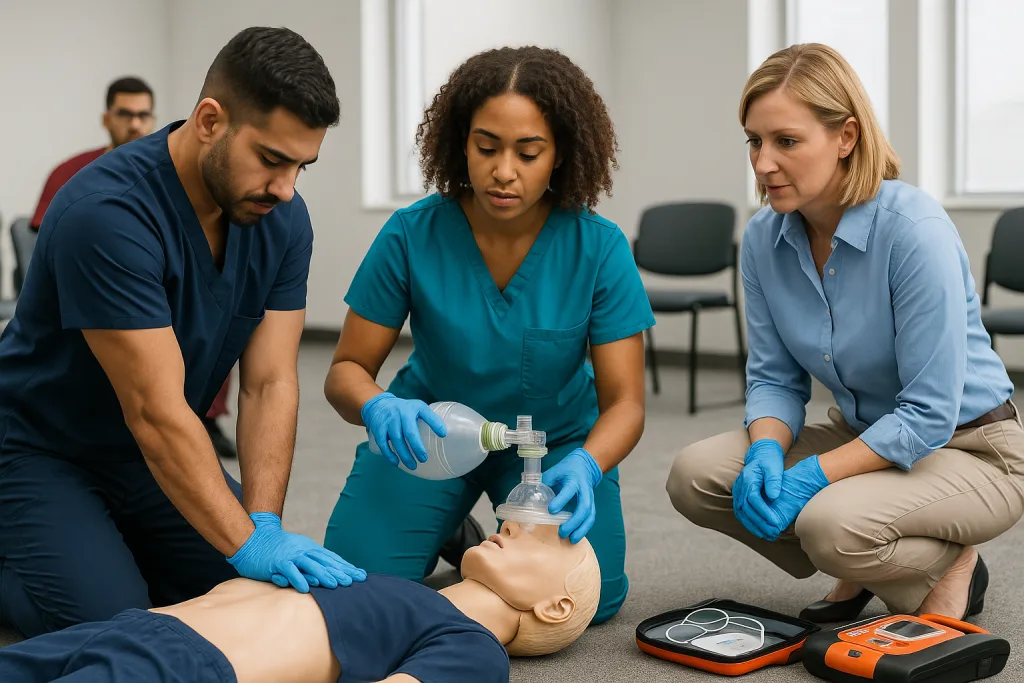
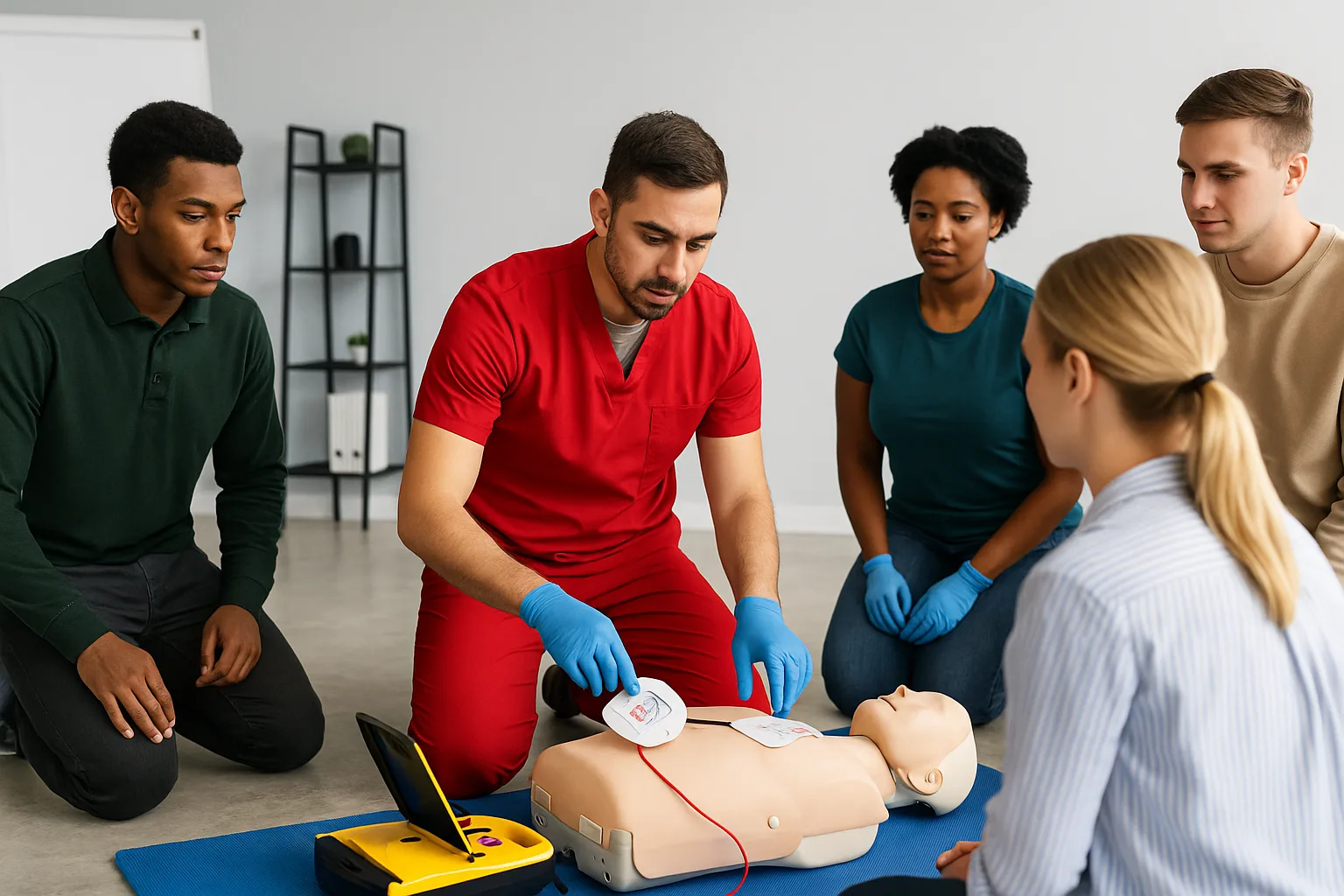
Training includes mannequins, AED simulators, bag-valve masks, and barrier devices.

On completion, you’ll receive a 2-year digital certification.
Core BLS Skills You'll Master

High-Quality CPR Across Age Groups

We cover:

AED Operation and Safety

We cover:

Choking Relief Techniques

Step-by-step instructions for:

Airway Management Skills

You'll practice:

What is Basic Life Support (BLS)

Staying Current: Recertification Requirements

BLS certifications typically last 2 years. After that, you must take a renewal course to remain compliant with your job or license requirements.

How to Book Recertification Easily

BLS in Action: Real-World Application

Code Blue Scenarios in Hospitals

Immediate BLS intervention can double survival rates during cardiac arrest in medical facilities. We’ll walk you through how to respond under pressure.  

Responding in Clinics or On-the-Go

Many medical emergencies occur outside of critical care units. We prepare you to act in exam rooms, waiting areas, or even the parking lot.

Benefits of Training with Upstate Aquatics

Benefits of Training with Upstate Aquatics

Whether you’re a solo learner or scheduling for a team of 30, we can accommodate:

FAQ – Basic Life Support

Is this course accredited?
Yes, we follow AHA and ARC-compliant BLS curriculum accepted by hospitals and licensing boards.
 Yes, but it’s designed specifically for medical professionals. If you’re not in healthcare, consider our standard CPR/AED course.
We’ll provide additional practice and a re-evaluation opportunity. Our goal is to help you succeed.
Yes. You’ll receive a digital and printable certification, valid for 2 years.
Absolutely. We frequently train groups at medical offices, dental clinics, and nursing facilities across NY.

Frequently asked questions about Basic life support

Who is Basic life support for?

Healthcare providers and professional rescuers who need Basic Life Support rather than lay-responder CPR.

How long does Basic life support take?

A single session with a hands-on skills assessment on the day. The certification is valid for two years.

What does Basic life support cover?

Adult, child and infant CPR, AED use, bag-valve-mask ventilation, and team-based resuscitation.

Last updated: